The voyage is part of a five-year Endeavour Fund programme, Catching Marine Carbon: Testing Ocean Solutions for Climate Mitigation using Natural Analogues.
Dr Law says the natural analogue explored on the first voyage is the natural supply of alkalinity by rivers, groundwater and sediments in Hawke’s Bay. This will provide an analogue for the deliberate addition of alkaline substances to the ocean, such as olivine, which would alter the chemistry of seawater and increase its CO2 uptake.
![Two river plumes in Hawke Bay [Credit: Sentinel-2 L2A True colour satellite, Copernicus].](/assets/News-photos/2023-11-11-00_00_2023-11-11-23_59_Sentinel-2_L2A_custom_CREDIT_Copernicus-Sentinel-data__ResizedImageWzEwMDAsNjIwXQ.jpg)
Two river plumes in Hawke Bay [Credit: Sentinel-2 L2A True colour satellite, Copernicus].
“In nature, this alkalinity is delivered to the ocean by rivers and groundwater transporting dissolved minerals from soils and rocks. This stabilises the pH, protecting marine life from the harmful effects of ocean acidification, and converts CO2 to other forms that don’t exchange with the atmosphere.”
He says while this process is understood, there is very little knowledge of alkalinity sources around Aotearoa NZ.
“Our goal with this voyage is to establish how much alkalinity is supplied by rivers and groundwater and track it across Hawke’s Bay. We are focusing on this region as there is evidence of higher alkalinity in some rivers that flow into Hawke Bay.”
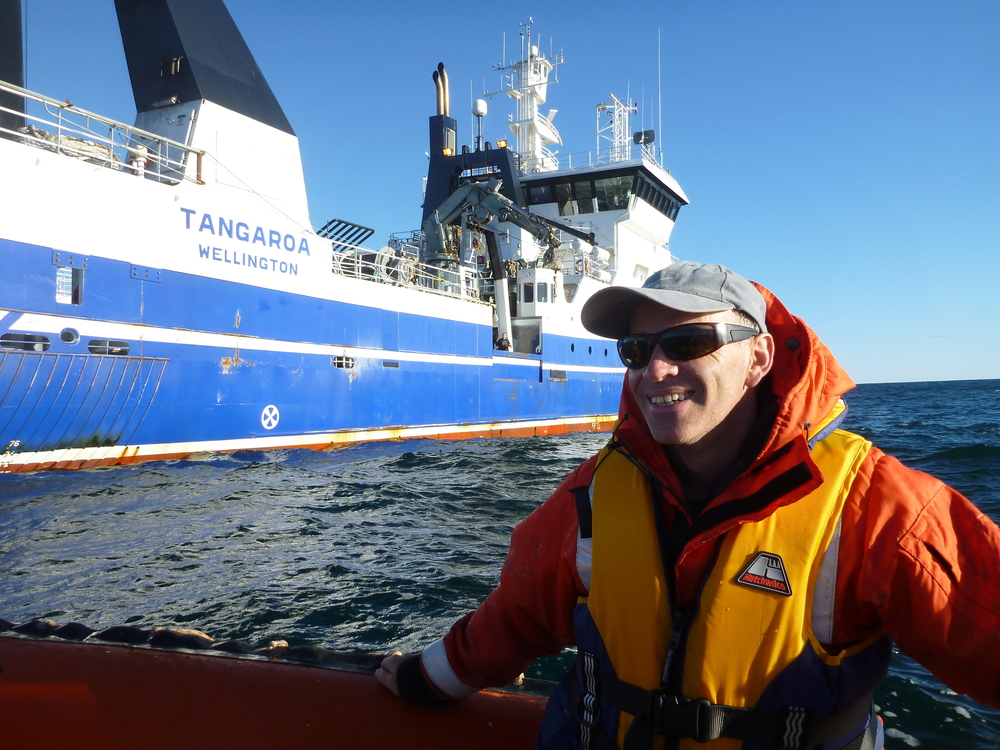
To achieve this, the researchers will run a multi-vessel campaign, with the Earth Sciences NZ research vessel, Tangaroa, mapping the offshore region and potential groundwater sites in in Hawke Bay. A smaller Earth Sciences NZ research vessel, Kimiora, will host a team of international scientists from Canada who will track the nearshore river plumes, and an autonomous underwater glider will map the water column across the bay.
![The Slocum Glider [Rebekah Parsons-King / Earth Sciences NZ].](/assets/News-photos/2022_04_18_TAN2206_TESMaP_parsonskingDSC05269.jpg)
The Slocum Glider [Rebekah Parsons-King / Earth Sciences NZ].
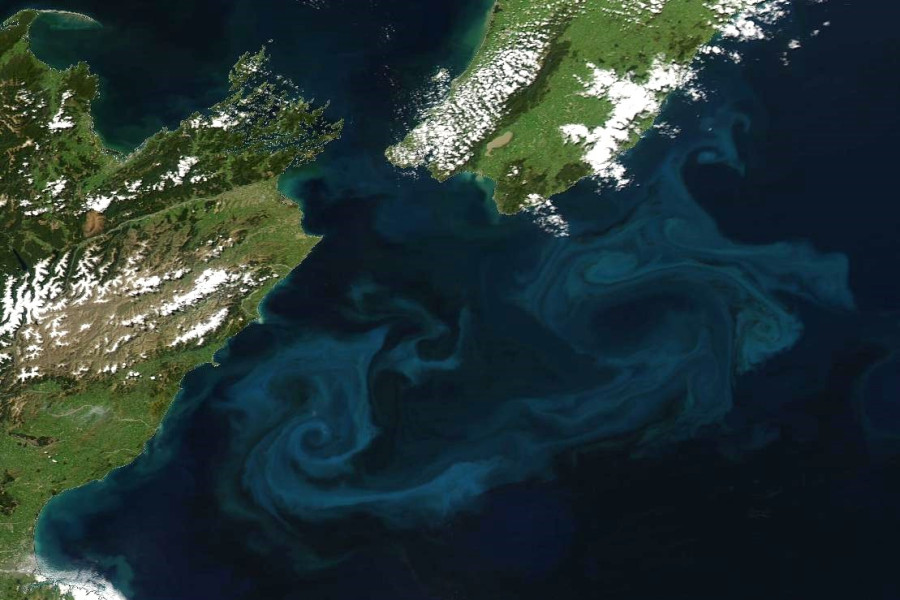
In future years, the programme will include research voyages examining other natural processes, such as the fate of carbon in wood deposited on the seabed following Cyclone Gabrielle, and also carbon transfer to the deep ocean following natural phytoplankton blooms.