
The comments below are intended to help explain what is currently understood about the likely physical processes involved, how climate change can influence these types of hazards, and what this could mean for Aotearoa New Zealand.
The comments can be attributed to Dr Simon Cox, Chief Scientist - Mountains to Sea, Earth Sciences New Zealand.
What exactly happened in Nepal?
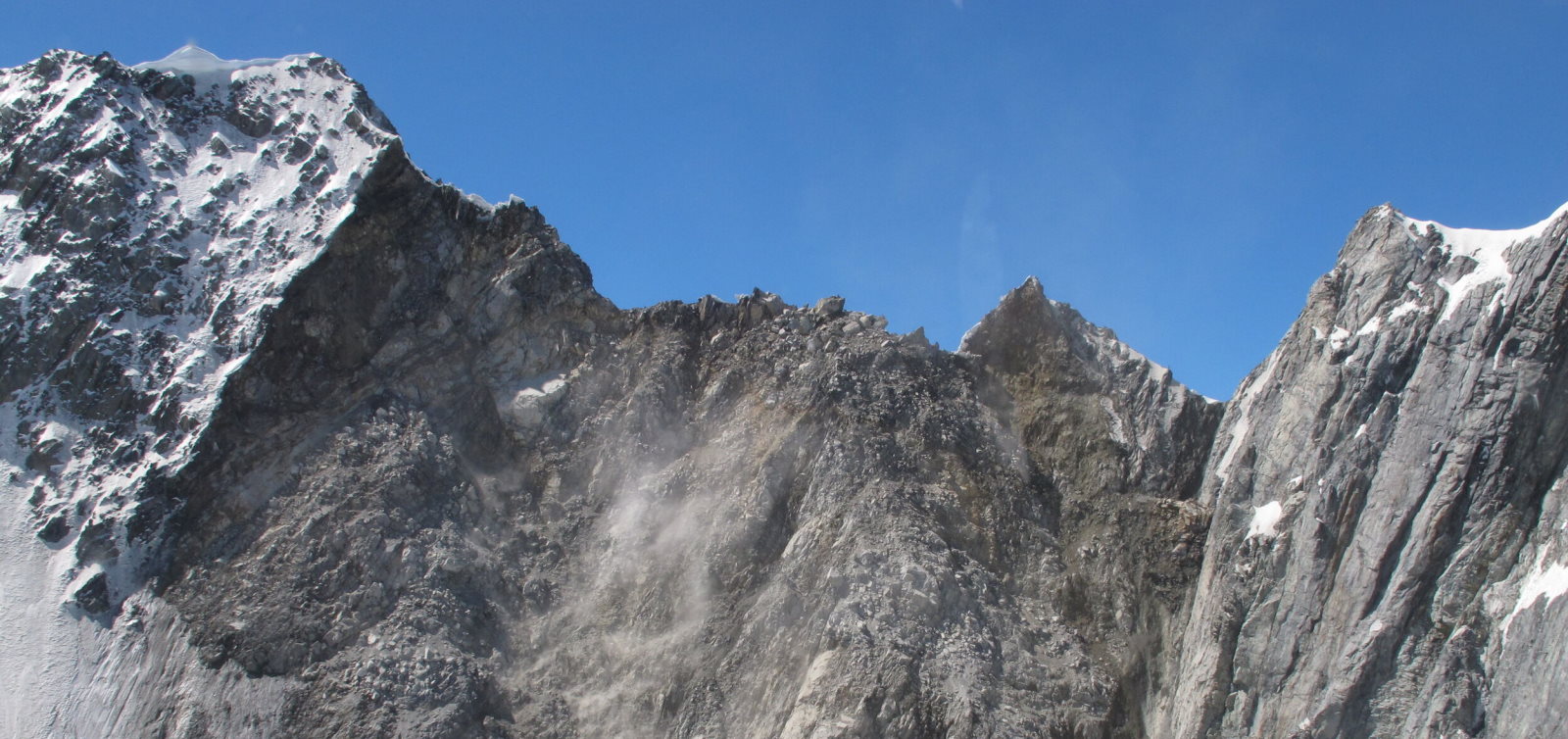
At this stage, full details are still emerging, including exactly what collapsed and how much material was involved. What is clear is that a large volume of ice came from a glacier high in the headwaters. Rock and subglacial water may also have been involved.
The material appears to have fallen from around 5,200 metres into a valley 1,200 metres below, where it transformed into a very large debris flow by entraining water, sediment and other material as it moved downstream. It may have formed a dam that subsequently burst. The massive rapid debris flow travelled over 60 km down a river valley and out of the mountains.
While reports initially attributed the ground tremors to a magnitude 4.4 earthquake, updated data from analysis of long period seismic waves by the US Geological Survey indicates that the seismic energy was instead generated by the impact of collapsed material itself.
What impact is climate change having on events like these?
It is important not to describe climate change as the simple or sole trigger for this event. However, climate change is generating conditions that can destabilise high mountain rock and ice, making these kinds of high-mountain collapses and cascading hazards more frequent.
Climate change is affecting the stability of snow, ice and rock in high mountain environments. Warming can reduce ice support on steep slopes, increase meltwater, and change freeze-thaw and rainfall patterns. These changes can weaken slopes and make large collapses more likely in some locations.
Could something like this happen in Aotearoa New Zealand?
Aotearoa New Zealand has steep, glaciated mountain terrain where ice, rock and debris can fail and move rapidly downslope. Large rock and ice avalanches have occurred in the Southern Alps, fortunately generally in remote areas without major impacts on people or infrastructure.
Researchers are mapping these events and studying their causes, which can include glacier retreat and loss of ice support, heavy rain, meltwater, freeze-thaw processes and earthquakes.
The risk in New Zealand is somewhat different from places such as the Himalayas, largely because our highest mountain regions are much less populated. However, events such as this demonstrate the importance of considering cascading hazards. When a large landslide or ice avalanche enters a river or lake, it can entrain water and sediment, temporarily dam a river, generate waves, or produce debris flows and floods that transfer the effects many kilometres downstream.
We understand many of the processes involved and know where these types of hazards have occurred in the past. A systematic assessment is needed to determine which of our mountain areas may become more prone to these hazards in the future as the climate continues to warm.
For more information contact:
Stacy Mohan | Senior Communications Advisor, Weather and Climate Hazards, Earth Sciences New Zealand
Email: [email protected] Mobile: +64 21 574 541