
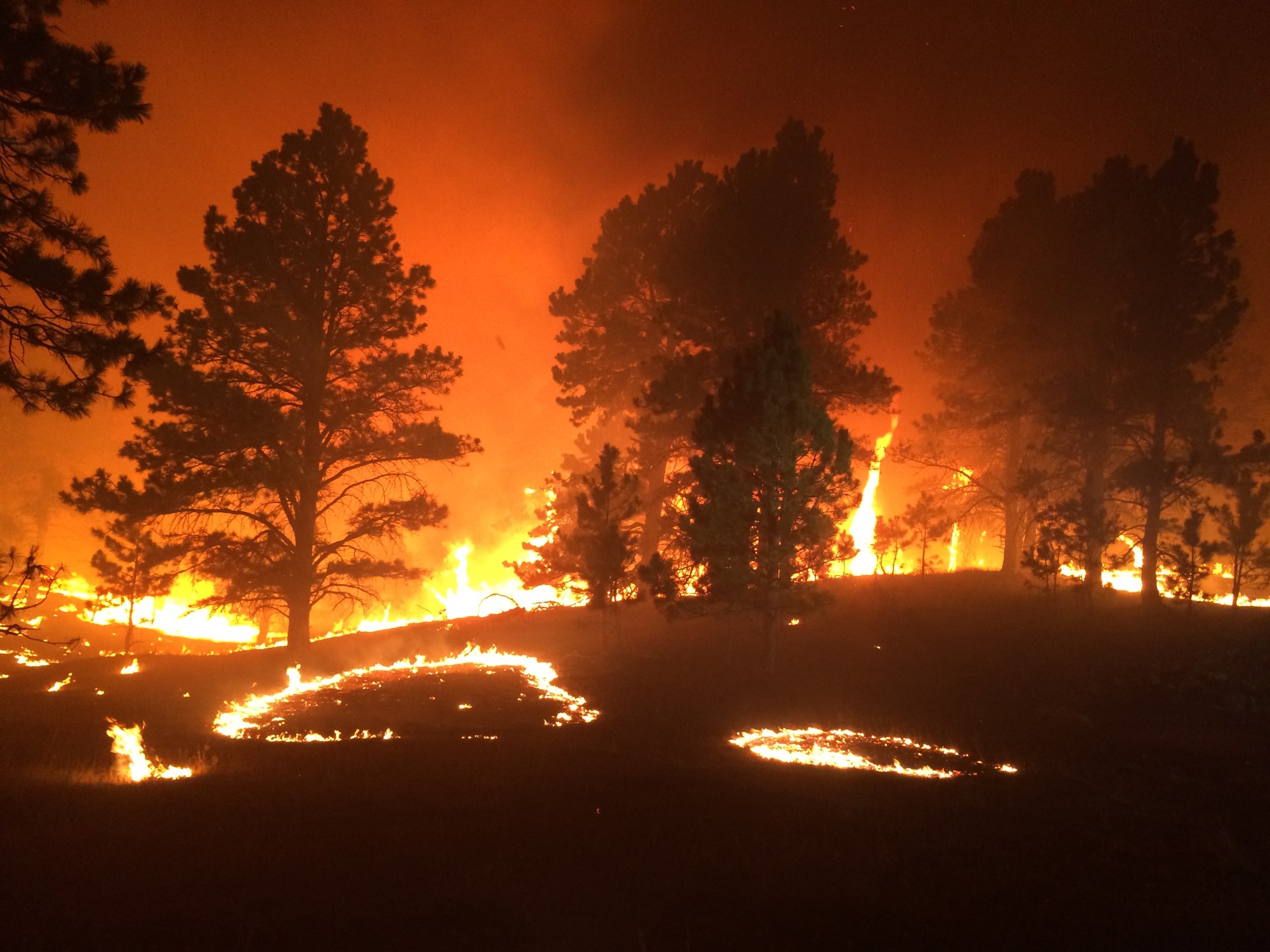
Auburn fire in South Dakota [📷 by Bela Harrington/USFWS]
The World Meteorological Organization (WMO) Greenhouse Gas Bulletin provides an annual review of the latest greenhouse gas measurements from its global observational network, including data from Earth Sciences New Zealand’s sites at Lauder and Baring Head in New Zealand, and Arrival Heights in Antarctica. The report shows that levels of carbon dioxide and other major greenhouse gases reached unprecedented highs in 2025, continuing to commit the planet to long-term temperature increases.
Concentrations of the more potent, but shorter-lived, methane also reached new highs. However additional analysis of the methane’s isotopic composition – the ‘fingerprint’ of the methane imprinted within its molecules – revealed something startling about its source. From mid-2023 through to 2025 there was a sharp rise in the percentage of methane emissions coming from wildfires compared to methane being released from microbial processes from wetlands or agriculture.
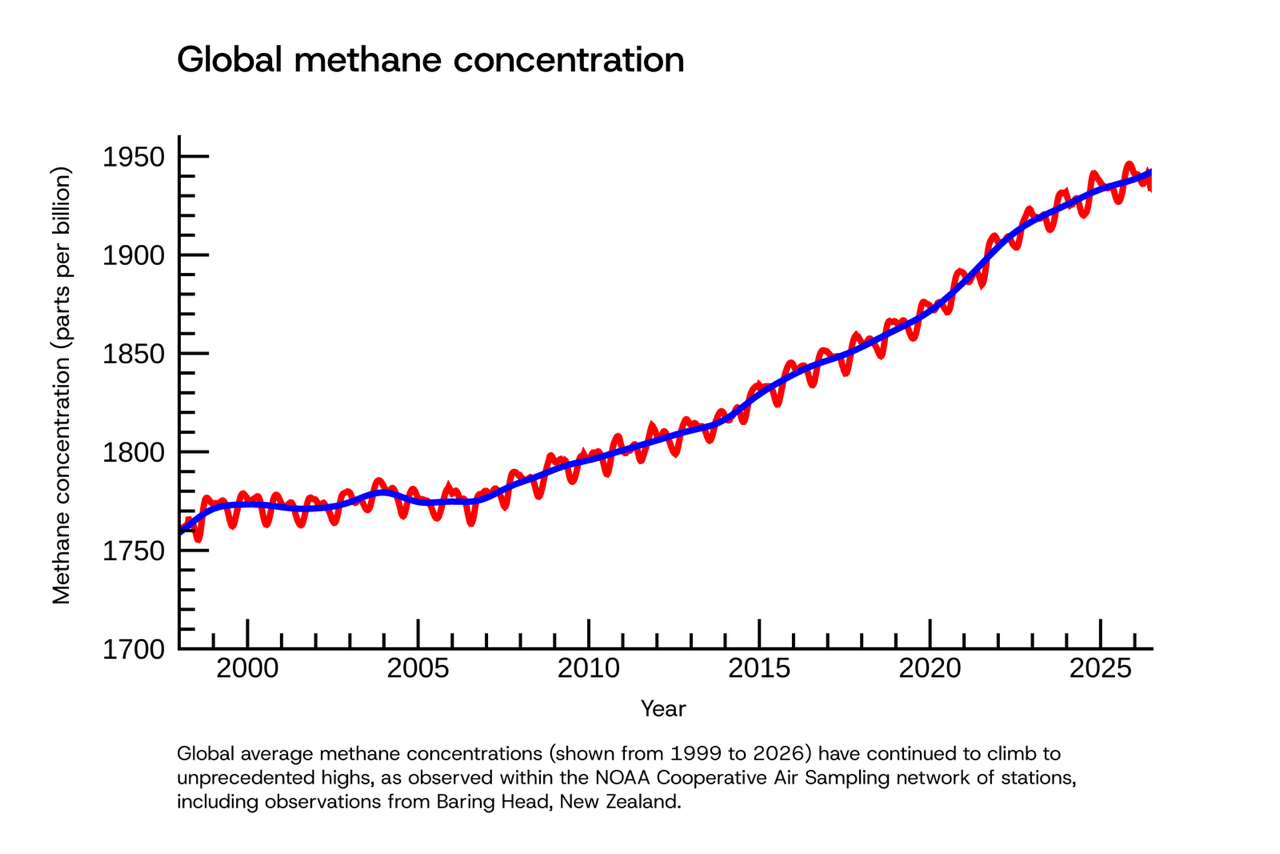
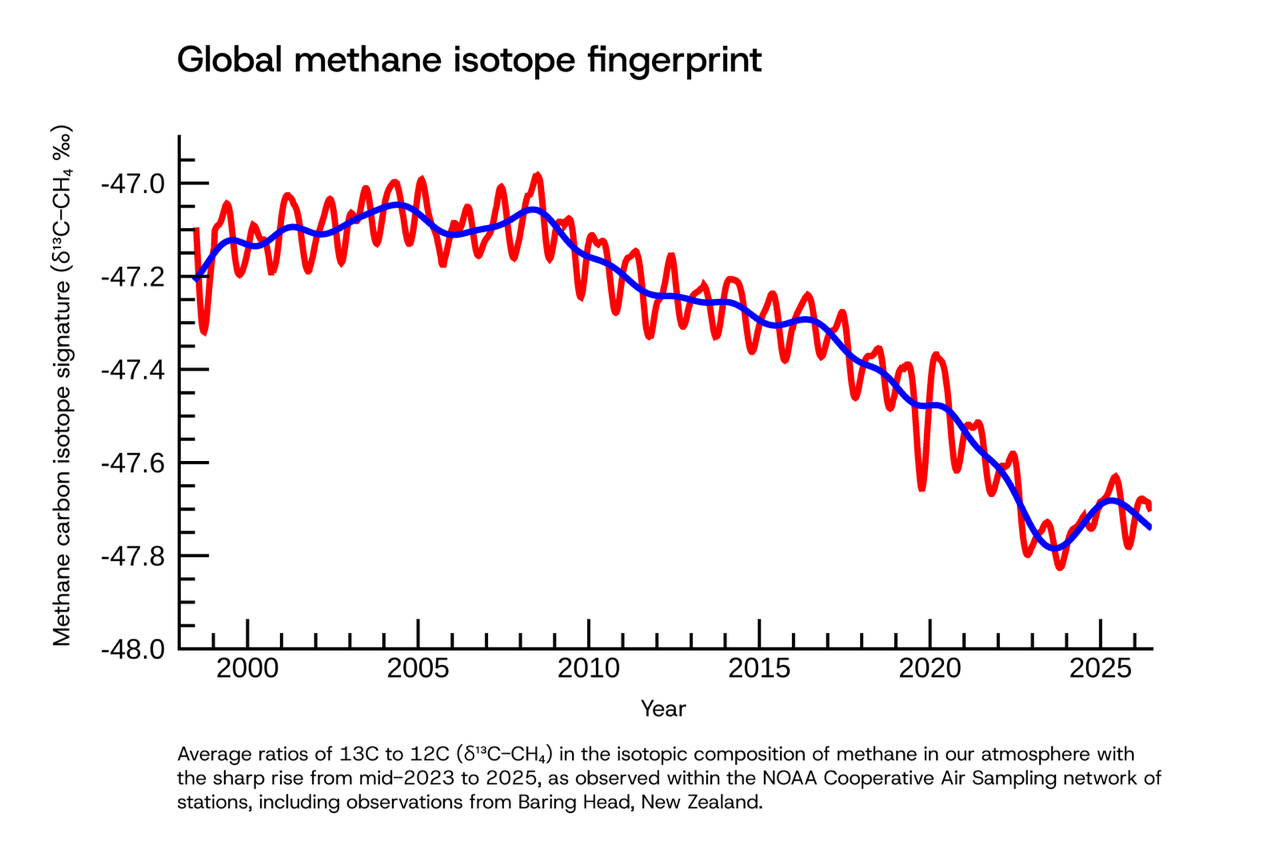
The report finds that the relative increase in methane with the biomass burning ‘fingerprint’ is likely due to the record-breaking wildfires in North America and the Amazon of 2023 and 2024 – along with smaller, drought-driven decrease of methane emissions from wetlands lowering the relative contribution from microbial sources.
Human-induced climate change from the burning of fossil fuels has been proposed as the main force behind these wildfires, further compounded by an El Niño weather event, which brought hot and dry conditions favouring wildfires and reducing wetland emissions in impacted areas at the same time.
The relative amount of methane with the wildfire isotopic signature had nearly returned to 2023 levels by the end of the observation period. However, the temporary rise could be an early indicator of human-induced climate change leading to large-scale shifts in the Earth’s system says Dr Peter Sperlich, Earth Sciences New Zealand atmospheric scientist and lead author of the methane isotope section of the WMO report.
“This is not just a blip in the atmospheric record – this is the first time that wildfires have become so big that they’ve released methane at a level we can detect in methane isotope records at global scale.”
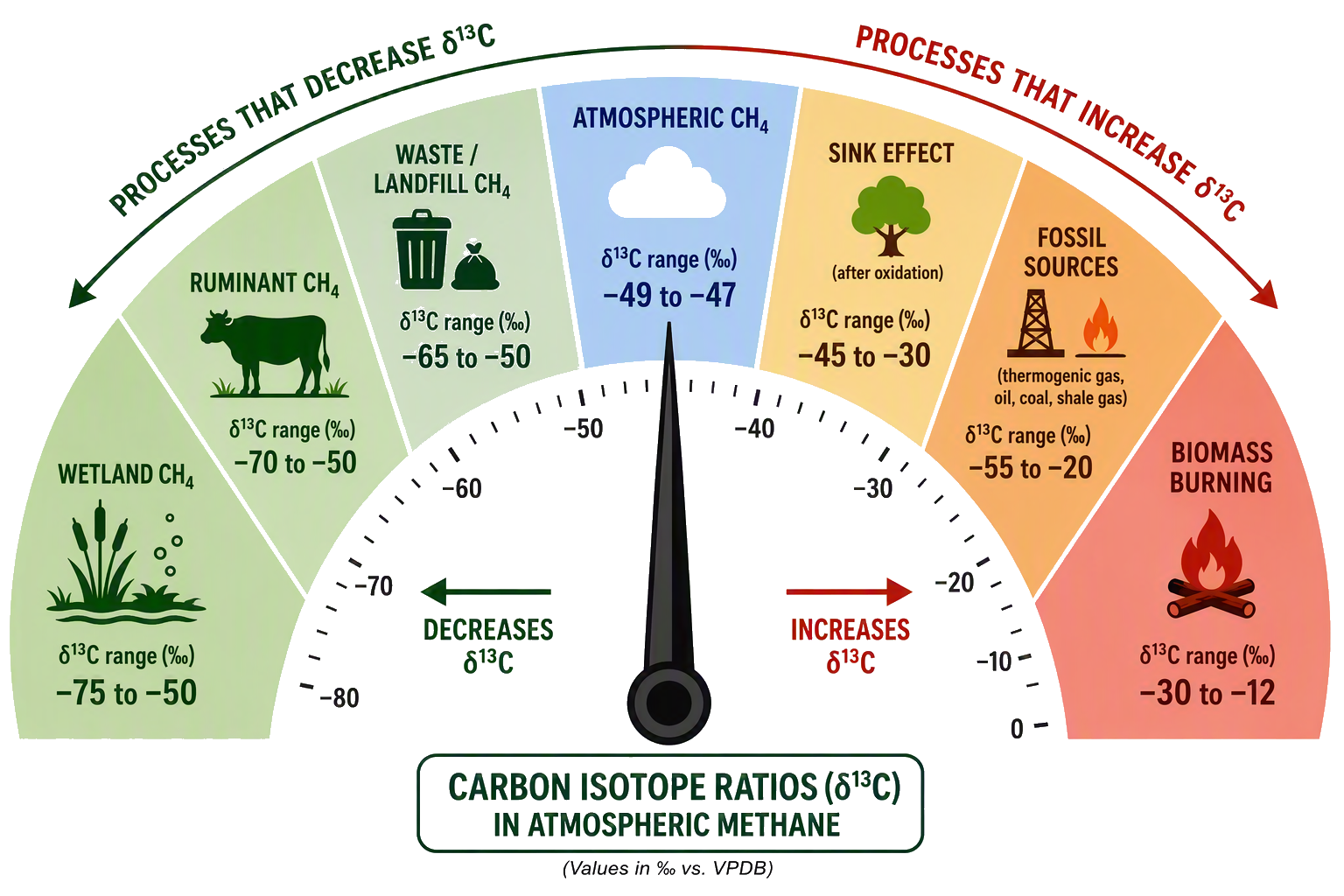
The different processes that impact isotopic composition of methane. [Credit: World Meteorological Organization. Made with the assistance of AI.]
Earth Sciences New Zealand Chief Scientist – Changing Atmosphere, Dr Sara Mikaloff-Fletcher, says that the results are a stark reminder of the urgency with which we need to reduce human-caused greenhouse gas emissions.
“An increase in the frequency and severity of wildfires is one of the climate change impacts expected as we continue to warm our planet. Although in this case the share of methane emissions from biomass burning decreased again, it shows the potential for large-scale wildfires to drive an even greater increase in global methane emissions and accelerate climate change. The more quickly we act to reduce emissions, the more straightforward it will be to stabilise climate.”
Measurement and analysis of methane isotopes can also provide a wealth of information about methane emission sources on a much more local scale, even down to the level of individual farms. This is particularly relevant for New Zealand, where methane accounts for more than 50% of our emissions, primarily from farmed livestock and waste facilities.
Earth Sciences New Zealand is developing new tools to help New Zealand farmers, landfill operators and wastewater treatment facilities more accurately measure their methane emissions, verify sources and validate efforts to reduce them. The highly accurate and mobile system, deployed with drones and vehicle-mounted sensors, can be combined with methane isotope analysis to verify whether methane emissions on farms have come from agricultural practices or adjacent wetlands.
World Meteorological Organization finds carbon dioxide growth rates have tripled since 1960s
The WMO releases the Greenhouse Gas Bulletin annually to provide authoritative scientific information in the lead up to the UN climate conference COP. The latest Bulletin finds growth rates of carbon dioxide have tripled since the 1960s, accelerating from an annual average increase of 0.8 ppm per year to 2.4 ppm (parts per million) per year in the decade from 2011 to 2020. From 2024 to 2025, the period covered by the Bulletin, the global average concentration of carbon dioxide rose by 2.8 ppm.
“Yet again carbon dioxide, methane and nitrous oxide have reached unprecedented highs. These greenhouse gases are trapping heat in the atmosphere, fuelling extreme weather, drought, wildfires and other climate change impacts. These impacts which are already being felt here in New Zealand. Our research to better understand and measure our emission sources and sinks, and ultimately support and validate effective greenhouse gas mitigation, has never been more vital,” says Dr Mikaloff-Fletcher.