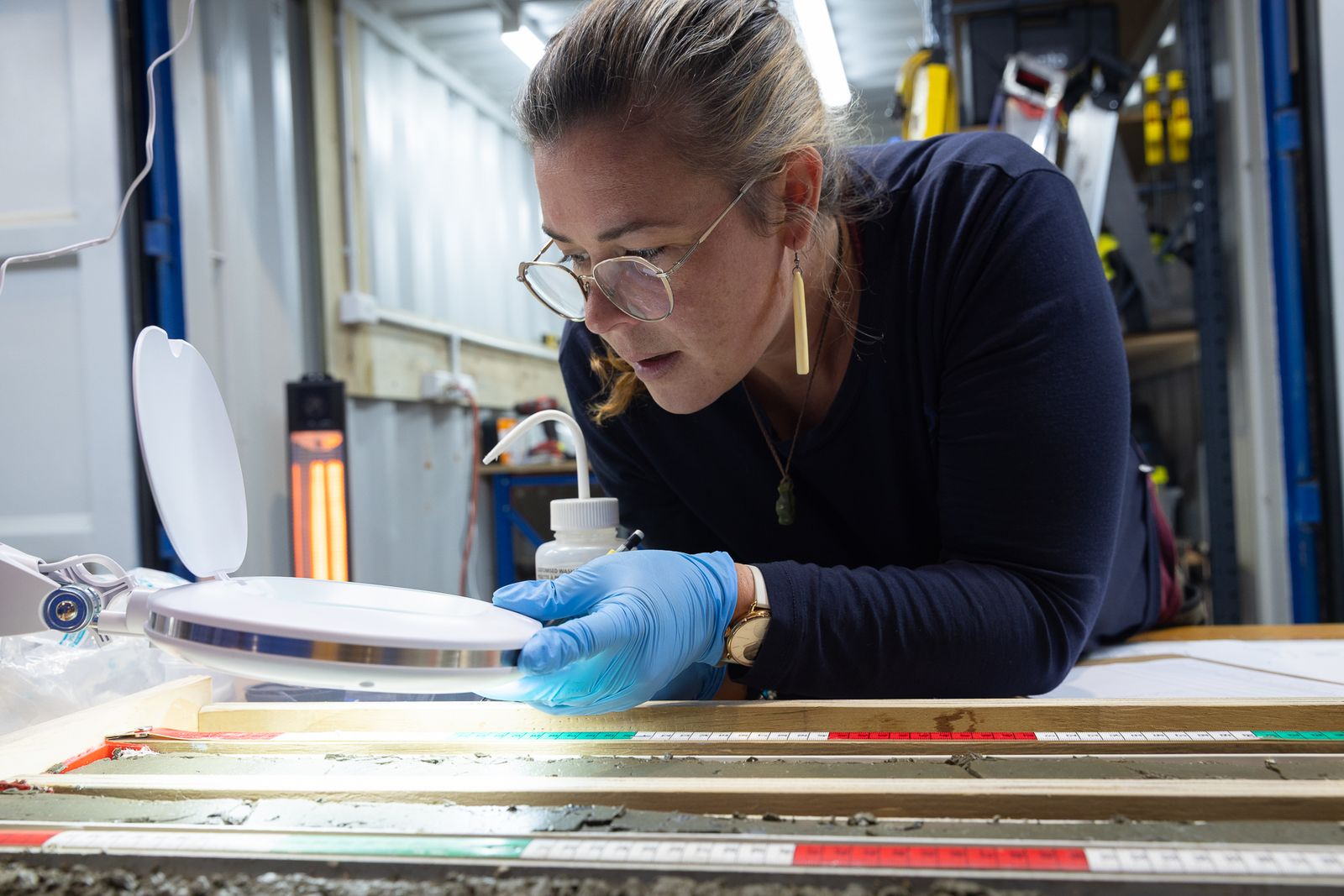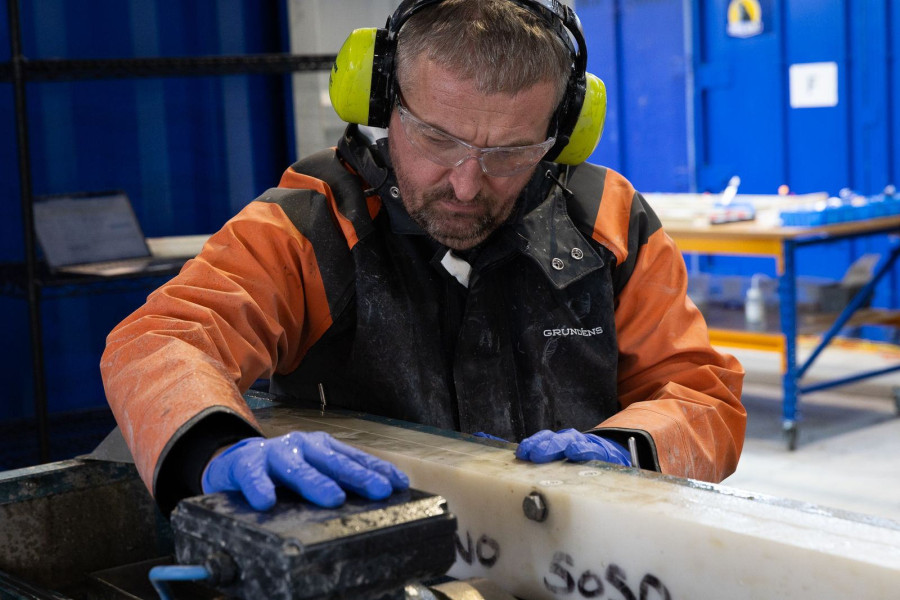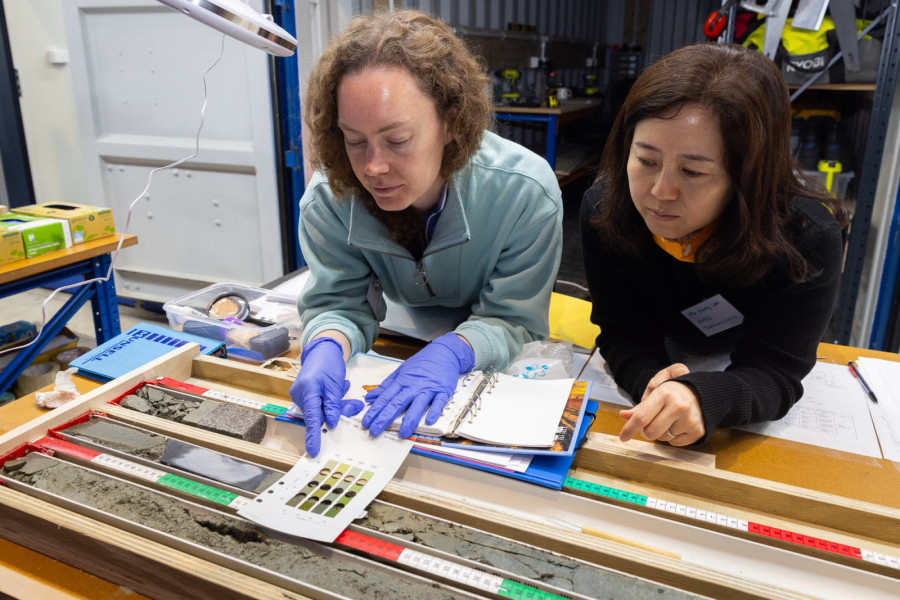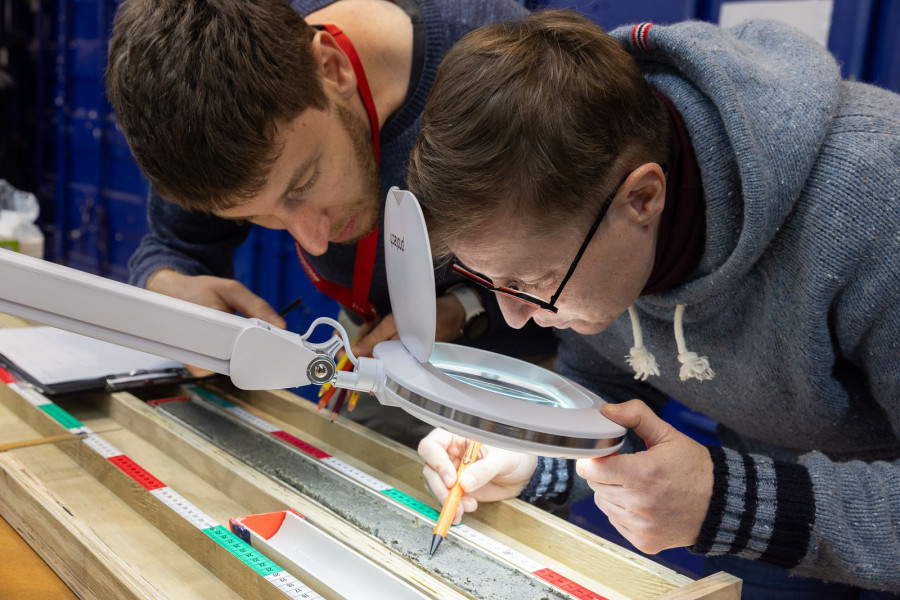
Nikola Koglin, BGR, and Luca Zurli, University of Siena, from the clastology team. Photo: Ana Tovey / SWAIS2C
The micropaleontologists took small samples from the ‘working’ half, to process and view under the microscope. Some were looking for the remains of diatoms, a type of phytoplankton with silica shells, which can provide vital information to help date the layers of sediment. Others were on the lookout for foraminifera fossils, whose chalky calcium carbonate shells can hold useful records of past climate and environments.
Throughout the workshop the diatom experts continued to refine the age estimates based on the assemblages of diatom species they were finding. The majority of the core is now thought to be 7 to 10 million years old, with a final 20 metres at the bottom stretching back 17-19 million years.
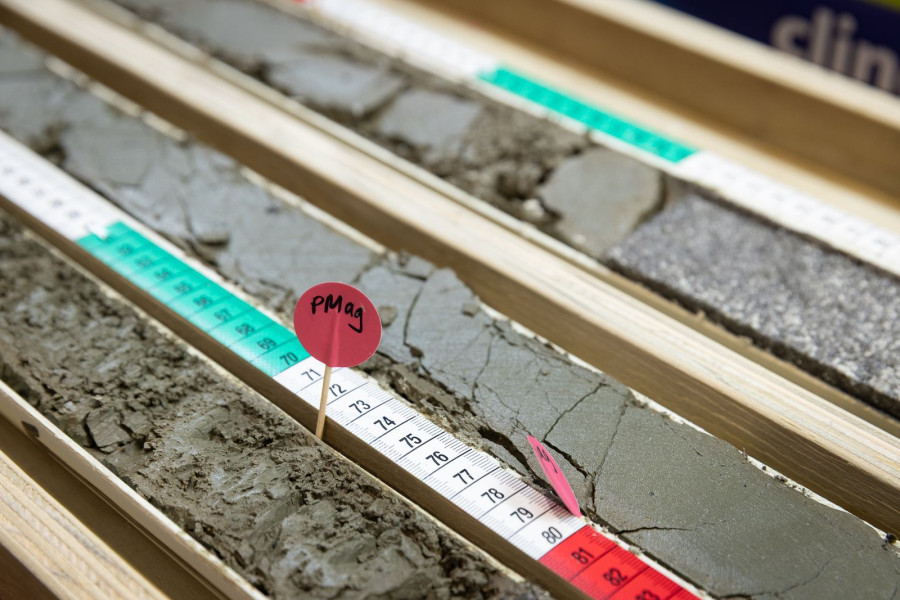
The paleomagnetics team took samples to look for evidence of the magnetic field preserved within the core, which will be used to further improve age estimates.
The physical properties team ran the core through various instruments for high-resolution imaging and measurement of density and other properties of the sediment, to identify layers and fragments that can’t easily be seen with the naked eye.
The wider SWAIS2C science team will use the preliminary data and observations from the workshop to guide decisions on where in the core is best to sample to answer their key questions.
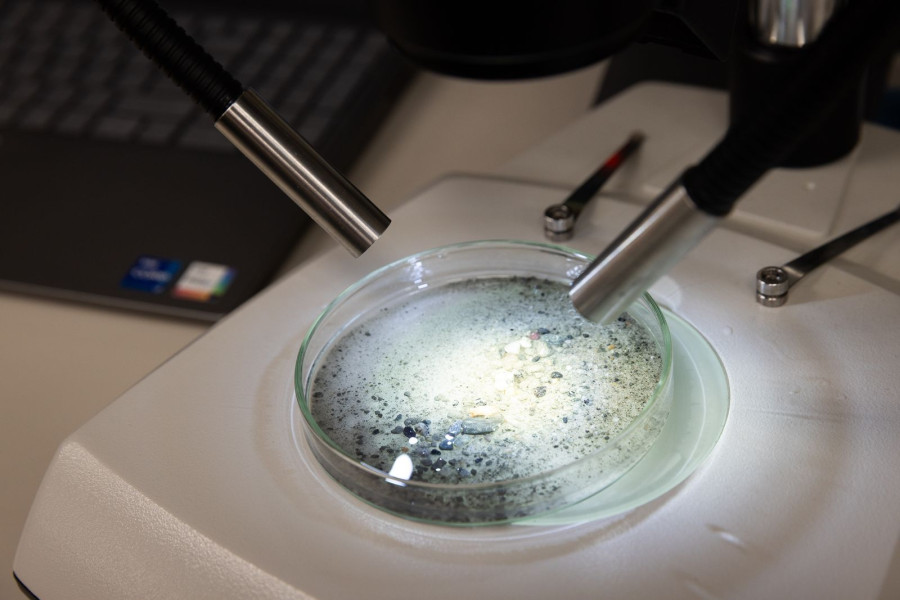
A sediment sample ready to be searched for foraminifera microfossils. Photo: Ana Tovey / SWAIS2C